
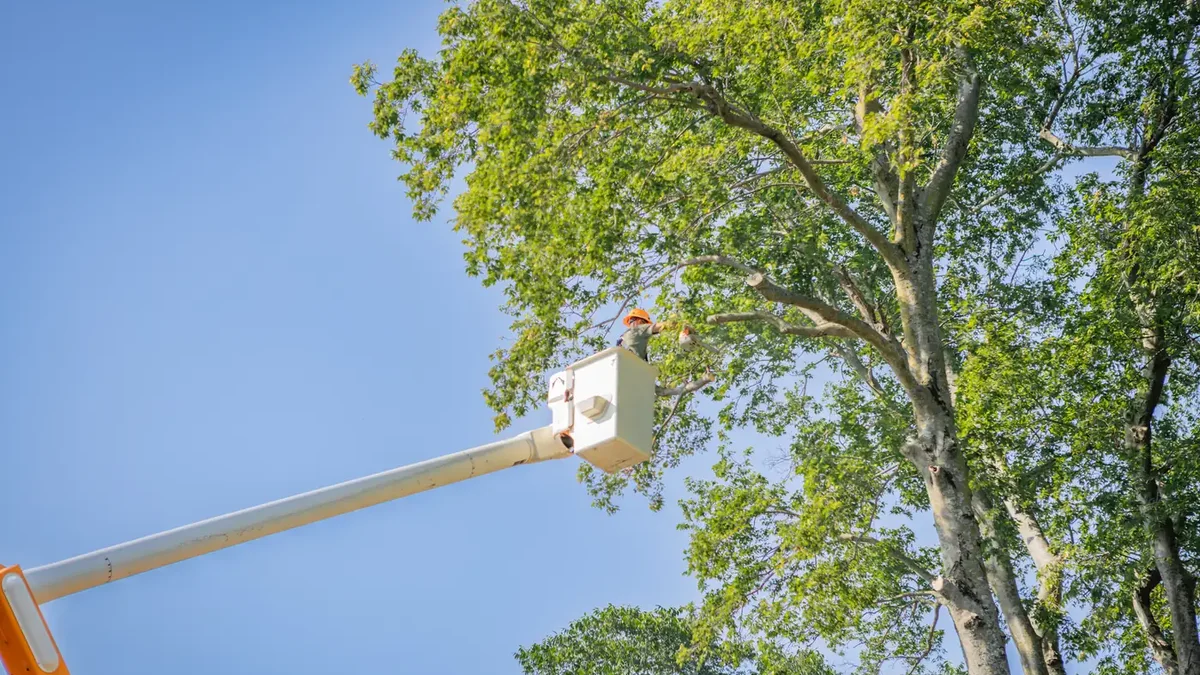
Oak trees are the backbone of the Northeast Oklahoma landscape. Post oak, bur oak, blackjack oak, water oak — they’re everywhere in Tulsa and the surrounding communities. And every spring, we get calls from homeowners who had their oaks trimmed in April or May and are now watching a tree decline.
The reason is oak wilt — and it’s preventable.
What Is Oak Wilt?
Oak wilt is a fatal fungal disease caused by Bretziella fagacearum. Once a tree is infected, there’s no cure. The fungus spreads through the tree’s vascular system and blocks water uptake; affected trees drop leaves, wilt, and die, typically within weeks to months in red oaks (which include post oak and blackjack oak), or over 1–2 years in white oaks.
In Oklahoma, oak wilt is spread primarily by sap-feeding beetles — specifically Nitidulid beetles — that carry fungal spores on their bodies. These beetles are most active during the spring flush, roughly February through June, and they’re attracted to fresh pruning cuts. An open cut on an oak during this window is an invitation.
The Safe Trimming Window
Avoid trimming oaks from February through June.
The safest window for significant pruning work on oaks in Oklahoma is:
- Late summer (August–September) — Beetles are winding down; wounds still have the growing season to begin callusing.
- Fall (October–November) — Optimal. Beetles are largely inactive; cool temperatures reduce fungal activity.
- Winter (December–January) — Good. Full dormancy, beetles inactive, low disease risk.
For hazard pruning — a broken limb, a cracked branch over your roof — don’t wait if the limb poses immediate danger. Just seal the cut with a tree wound sealant immediately after the cut if you’re working during the risky window (this is one case where sealant is actually recommended).
Signs Your Oak May Have Oak Wilt
- Rapid leaf drop starting at the tips and outer branches, moving inward
- Leaves that turn brown but remain attached (especially red oak group)
- Wilting that progresses from the top of the crown downward
- Multiple oaks in the same area declining simultaneously (root graft spread)
If you see these symptoms, call us. We can help you assess whether the tree is recoverable, prevent spread to adjacent oaks through root graft disruption, and remove dead trees safely.
What About Emergency Situations?
If an oak limb breaks in a storm — during May, for example — you don’t have a choice about timing. Get the hazard addressed. Use a pruning sealant on fresh cuts. Have the tree inspected for stress afterward.
Our Rule
At Ironwood Tree Service, we follow the Oklahoma State University Extension guidelines on oak trimming timing. If you call us in April asking to have your oak trimmed, we’ll ask if there’s an urgent reason — and if there isn’t, we’ll suggest scheduling it for late summer or fall. It’s the right call for your tree.
Questions about your oaks? Call 918-201-1987. We’ll come out and take a look.
Frequently Asked Questions
When is the safest time to trim oak trees in Oklahoma?
Late summer through early winter — roughly August through January. This window avoids the peak activity period of the nitidulid beetles that spread oak wilt. Fall (October–November) is optimal: beetles are largely inactive and cool temperatures further reduce fungal activity.
Why can’t I trim my oak tree in the spring?
Spring pruning (roughly February through June) coincides with the period when sap-feeding beetles are most active in Oklahoma. These beetles carry oak wilt spores and are attracted to fresh pruning cuts. A cut made in April is essentially an open invitation during the highest-risk window. It’s not that trimming is impossible — it’s that the risk of introducing a fatal disease is significantly elevated.
What if I have a broken or hazardous oak limb during oak wilt season?
Get the hazard addressed — don’t leave a broken limb because of timing. Apply a pruning sealant to the fresh cut immediately after trimming, which creates a barrier against the beetles. Have the tree checked for stress afterward, especially if a significant amount of wood was removed.
How do I know if my oak has oak wilt?
Common signs include rapid leaf drop starting at the outer tips of the canopy and moving inward, leaves that turn brown and stay attached (especially in red oaks, which include post oak and blackjack oak), and wilting that progresses from the top of the crown downward. If multiple oaks in the same area are declining at the same time, root graft spread is likely. Call us — we can assess the tree and discuss options.
Does oak wilt spread between trees?
Yes, in two ways. Beetles can carry spores from infected trees to fresh wounds on nearby healthy trees. And oaks in close proximity often have interconnected root systems (root grafts) that allow the fungus to spread underground — this is why you’ll sometimes see several trees in a cluster decline in sequence. Disrupting the root grafts between an infected tree and its neighbors is sometimes recommended to slow the spread. �����������������������������������������������������������������������������������������������������������