
Ironwood Tree Service provides 24/7 emergency tree service throughout Tulsa and Northeast Oklahoma, helping homeowners address fallen trees, hazardous limbs, and urgent tree removal needs. Call us any time, day or night, to explain what happened and discuss the next steps.
- 24/7 emergency response
- Fully insured tree service
- Free written estimates
- Locally owned and operated
When Should You Call for Emergency Tree Service?
Emergency tree service is necessary when a fallen tree, broken limb, or unstable trunk threatens people, buildings, vehicles, or access to your property. Some situations require immediate attention, even if the tree hasn’t completely fallen. If you’re unsure how dangerous the situation is, call us and describe what you’re seeing.
Contact Ironwood Tree Service if you have:
- A tree on your house or roof: A fallen tree can damage shingles, framing, gutters, and other structural components.
- Large branches hanging over your home: A split or partially broken limb may fall without warning.
- A tree blocking your driveway: Fallen trees can prevent vehicles from entering or leaving your property.
- A tree leaning after a storm: Newly exposed roots, a shifted trunk, or cracked soil around the base may indicate instability.
- A tree that has fallen on a fence, garage, or outbuilding: Even when the damage appears limited, the remaining trunk and branches may still be unstable.
- Storm-damaged trees near occupied areas: Broken limbs and partially split trunks can remain dangerous after the weather clears.
If the tree is already down and no immediate hazard remains, we can also help arrange storm damage cleanup to remove fallen trees and debris.
What Should You Do Before Our Emergency Tree Crew Arrives?
The first priority after tree damage is keeping people away from the hazard. Don’t attempt to cut, pull, or move a fallen tree yourself, especially if it’s resting on a structure or tangled with other branches. While you wait for assistance, take these steps to protect your household.
- Move people and pets away. Keep everyone clear of the damaged tree and the surrounding area.
- Stay out from under hanging branches. Limbs caught in other branches can shift or fall unexpectedly.
- Keep away from electrical wires. Treat any downed or damaged power line as energized, even if it isn’t sparking. Contact the electric utility and emergency services as appropriate. See OSHA’s guidance on downed electrical wires.
- Leave trees on structures alone. Don’t climb onto a roof or try to relieve the weight of a tree with a chainsaw.
- Call Ironwood Tree Service. Tell us where the tree fell, what it struck, and whether anyone is in immediate danger.
- Document the damage when safe. Photos taken from a safe distance may help when you contact your insurance company.
If a tree has caused an immediate threat to life, a building is showing signs of collapse, or a fire or other serious hazard is present, contact emergency services first.
What Does Our Emergency Tree Service Include?
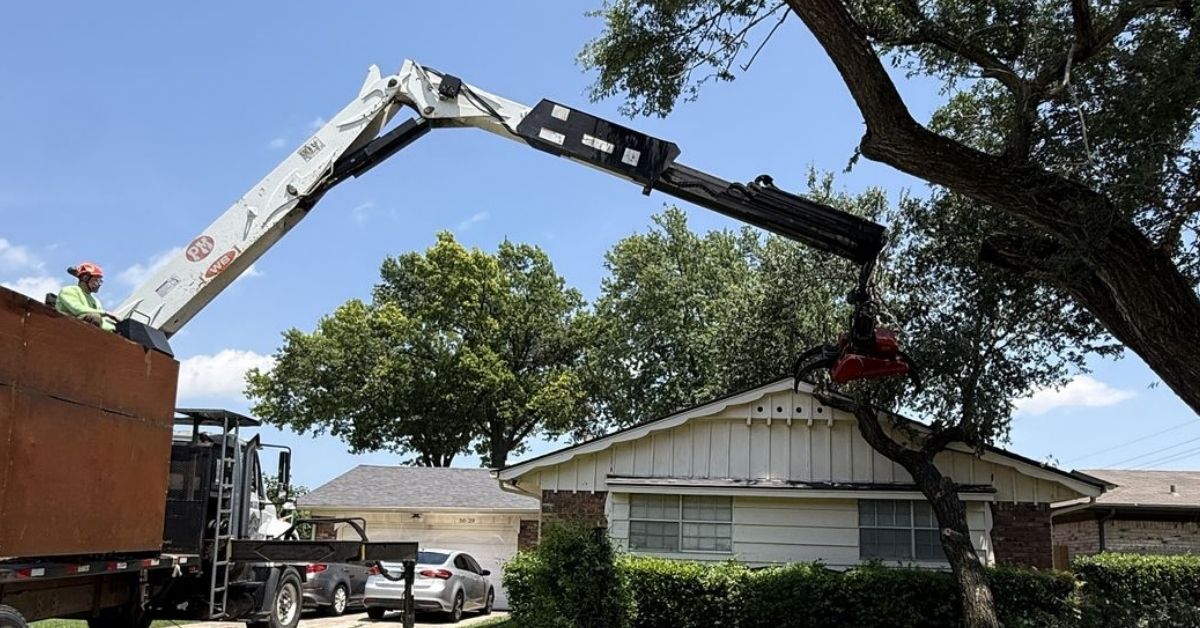
Our emergency tree service addresses fallen trees, hazardous limbs, and storm-related damage that needs prompt attention. The work depends on where the tree has fallen, how stable the remaining tree is, and whether the damage affects a home, vehicle, fence, or access route. We assess the situation and explain the work needed before proceeding.
Depending on the circumstances, emergency tree work may include:
- Emergency tree removal: Removing a tree that has fallen or become a serious hazard.
- Hazardous limb removal: Addressing broken or suspended branches that threaten structures or frequently used areas.
- Tree removal from structures: Planning the removal of a tree resting on a roof, garage, or other building.
- Access restoration: Clearing a driveway or other blocked area when the situation can be addressed safely.
- Storm debris removal: Removing fallen branches and tree debris as part of the cleanup.
- Follow-up tree removal: Removing a damaged standing tree when its condition makes it unsafe to leave in place.
Not every storm-damaged tree requires complete removal. Where appropriate, we assess whether the immediate problem can be addressed by removing damaged limbs or whether the tree needs to come down. For trees that need complete removal, our tree removal service covers the work from assessment through removal and cleanup.
Do You Need Emergency Tree Service After a Storm?
Yes. If a storm leaves a tree on your roof, a large limb hanging over an occupied area, or a tree blocking access to your property, contact us for emergency assistance. If the immediate danger has passed and you’re dealing with fallen branches or general yard debris, we can help with the next stage of cleanup.
Tulsa and Northeast Oklahoma experience severe weather that can leave trees split, uprooted, or weighed down by broken limbs. Damage isn’t always obvious from the ground. A tree may remain standing even when the trunk has cracked or its roots have shifted.
We handle urgent tree hazards as well as post-storm cleanup. Our storm damage cleanup service is available for fallen trees, broken branches, and debris left behind by severe weather. If you’re unsure whether your situation needs immediate attention or scheduled cleanup, call us and explain the damage.
Will Homeowners Insurance Cover Emergency Tree Removal?
Homeowners insurance may cover emergency tree removal when a covered event, such as a storm, causes a tree to damage an insured structure. Coverage depends on your policy, the circumstances of the damage, deductibles, and any applicable exclusions. A tree that falls without damaging a covered structure may be treated differently, so don’t assume the removal will automatically be covered.
If a tree has damaged your home, garage, or another insured structure, contact your insurance company to report the incident and ask what documentation is required. Take photos from a safe distance before cleanup begins, provided you can do so without approaching the hazard.
Ironwood Tree Service can explain the tree work involved and provide written documentation of the work scope to support your claim. Your insurer determines whether the expense is covered and how much it will pay. Ask your adjuster about approval requirements before authorizing work beyond what is necessary to address an immediate hazard.